Reef Lighting
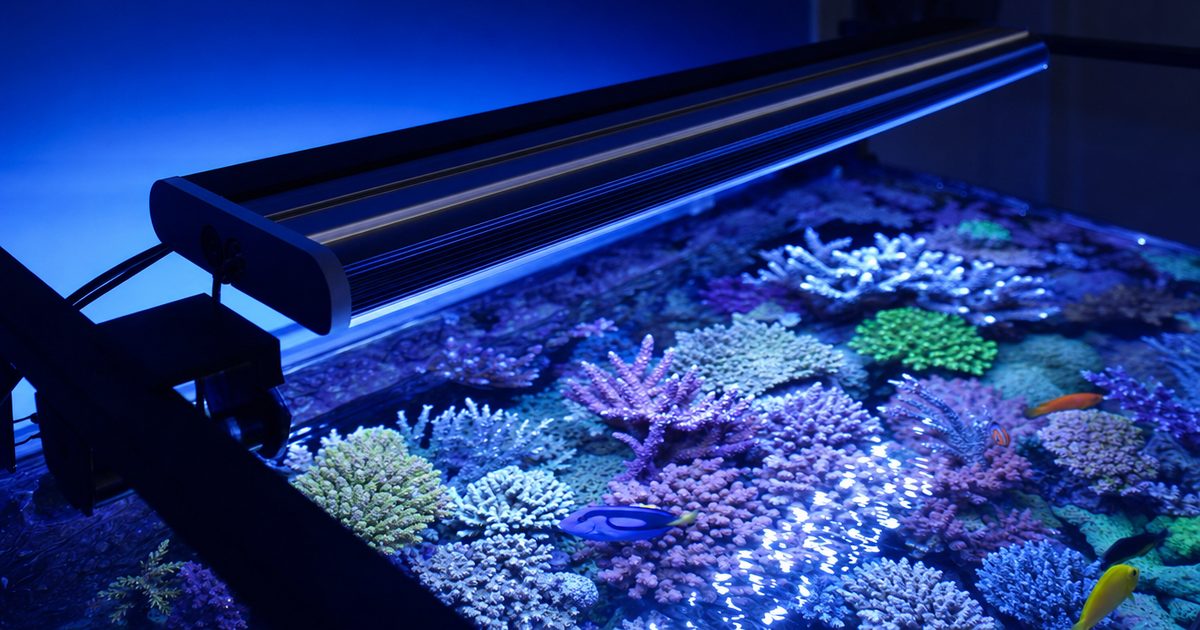
Lighting is where reef-keepers either match the light to their coral or guess and pay for it in bleaching or algae. This silo explains reef aquarium lights in plain English — PAR and spectrum by reef type (soft, LPS, SPS), coverage and mounting height, fixture versus puck, and the over-lighting trap. The buying logic is PAR-first: match the light to your hardest-to-please coral group. Specs are verified against manufacturer and current Amazon listings; no hands-on testing is claimed.
PAR, not watts, is the number that matters
The most common lighting mistake is shopping on wattage. Watts measure how much electricity a fixture draws, not how much usable light reaches your coral. The figure that actually matters is PAR — photosynthetically active radiation, the slice of light corals use for photosynthesis, measured at the coral rather than at the water surface. Two fixtures with identical wattage can deliver wildly different PAR depending on their LEDs, optics, spectrum and how high they're mounted. So when you compare reef lights, you compare PAR at a stated depth and spread, plus spectrum and coverage — not the wattage on the box. A PAR meter (borrowed from a reef club, often) is the honest way to know what your corals are actually getting once the light is over the tank.
How much light each coral group needs
Different corals want different light, and matching the fixture to your hardest-to-please group is the whole game. As a working guide drawn from established reef references:
- Soft corals (mushrooms, zoas, leathers) are the most forgiving — many do well at lower PAR, roughly 50–100, which makes them the sensible first corals while you learn the tank.
- LPS (large-polyp stony corals like hammers, torches and acans) sit in the middle, broadly comfortable around 75–150 PAR with good water flow.
- SPS (small-polyp stony corals like Acropora and Montipora) are the light-hungry, demanding end — roughly 150–300+ PAR at the coral, plus strong flow and rock-steady parameters. SPS are where lighting, flow and stability all have to be right at once.
Buy the light that covers your most demanding coral, and place lower-light corals further down or off to the sides. The other half of the rule is acclimation: corals adjust to light slowly, so ramp intensity up over weeks rather than blasting a new frag at full power, which bleaches it.
Coverage, spread and mounting height
A reef light has to cover your tank's footprint evenly, not just hit a bright spot in the middle. Coverage is the area a fixture lights to a usable PAR; spread is how evenly that light falls across it. Mounting height trades intensity for spread — raise a light and PAR drops but the coverage widens and the shimmer softens; lower it and PAR climbs but the footprint narrows and hot spots appear. The practical move is to match the fixture's rated coverage to your tank length and width, then fine-tune mounting height to even out the PAR across the rockwork. A long tank usually wants more than one fixture, or a spread-style unit, to avoid dark corners.
Fixture vs puck, and the over-lighting trap
Reef LEDs come in two broad shapes. A spread-style fixture lays light evenly across a wider footprint, which suits longer tanks and mixed reefs. A puck (point-source) light delivers high PAR over a smaller area with more shimmer, which suits cubes, nanos and SPS-focused builds where you want intensity in a tight footprint. Pick the shape that matches your tank, not the one with the highest headline PAR.
And then there's the trap that catches almost every beginner: over-lighting a young tank. A new system has no coral demand yet but plenty of available nutrients, so long, intense photoperiods don't grow coral — they feed algae, and you spend your first months fighting an algae bloom you created. Start with a shorter photoperiod at lower intensity, then ramp up as corals go in and the tank matures. Patience with the light, like patience with the cycle, pays off.
Featured guides
The current published guides in this silo. More land each batch.
Landing next: best light for SPS coral, best light for LPS and softies, reef light PAR explained, how much light for a reef tank, and best nano reef light.
Frequently asked questions
How much light does a reef tank need?
It depends on what you keep. Soft corals and many LPS thrive at lower PAR (roughly 50–150), while SPS want noticeably more (roughly 150–300+ at the coral). PAR — photosynthetically active radiation — is the figure that matters, measured at the coral, not at the water surface. Match the light to your hardest-to-please coral group, and acclimate corals up to higher light slowly. These are general reef-keeping guidelines, not a prescription for your specific livestock.
What is PAR, and why does it matter more than watts?
PAR measures the light corals can actually use for photosynthesis. Two fixtures with the same wattage can deliver very different PAR depending on optics, spectrum and mounting height, so watts alone tell you little. Reef lighting is chosen on PAR at the coral and on spectrum, with wattage only a rough proxy for output.
Will too much light cause algae in a new tank?
Over-lighting a young tank is a classic beginner trap. A new system has no coral demand yet but plenty of available nutrients, so long, intense photoperiods feed algae instead of coral. Starting with a shorter photoperiod and lower intensity, then ramping up as corals go in, is the safer approach.
Fixture or puck light for a reef?
A spread-style fixture covers a wider footprint evenly, which suits longer tanks; a puck (point-source) light delivers high PAR over a smaller area with more shimmer, which suits cubes and nano tanks. Coverage and spread are the specs that decide which fits your tank footprint.
Reef lighting is chosen on PAR and spectrum for coral photosynthesis, which is a different brief from growing aquatic plants under freshwater lights. If you also run a planted tank, Planted Tank Hub is the freshwater-planted counterpart for plant-growth lighting and aquascaping as our sister site. Coral & Flow stays strictly saltwater reef.