Best Reef Wavemakers
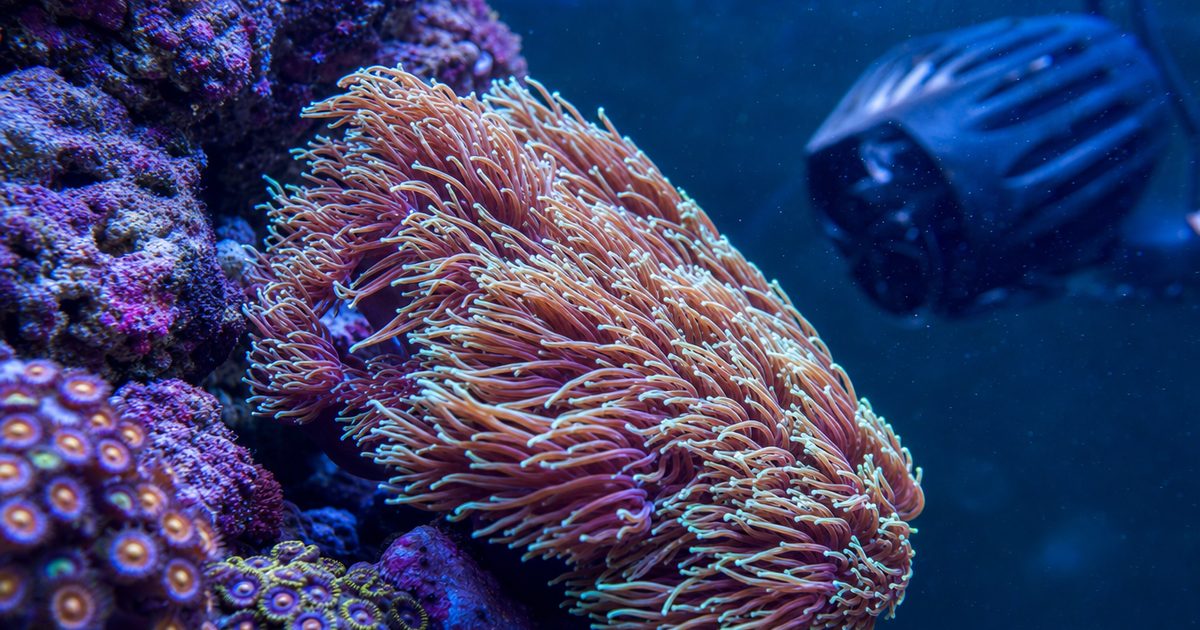
The right flow keeps corals fed, oxygenated and free of dead spots — and it is the single thing beginners under-buy most. The best wavemaker is not the most powerful pump on the shelf; it is the one that hits your turnover target with the flow type your corals want and a mount that fits your tank. This guide explains the specs that decide the fit — GPH, flow type, controllability, mount and wattage — then matches them to five categories: best overall, best budget, best gyre, best nano and best controllable. The verified picks appear in each slot once real product data is in.
A note on how to read this. There is no single "best" wavemaker for everyone — the right one depends on your tank size, which corals you keep, the tank shape and your budget. So the value here is the framework: what each spec changes, so you can shortlist a pump that suits your reef. Read the framework first, then look at the picks. Flow is the spec I got most wrong on my first tank. I came to saltwater from freshwater, did not understand turnover, and ran far too little flow — detritus settled in dead spots, corals never really opened, and it was one of the reasons that first reef crashed. Undersized flow and dead spots crash more first reefs than bad luck does, which is the whole reason this guide leads with turnover and placement instead of a single big pump.
Specs verified against manufacturer details and current Amazon listings — no hands-on testing claims. GPH and turnover figures are derived from published specs and established reef guidelines, not bench measurement. Livestock guidance is general reef-keeping information, not veterinary advice.
How to choose a reef wavemaker
A handful of specs decide whether a pump suits your reef. These are exactly the columns in the comparison below, and reading them in the right order — turnover target first, then how you deliver it — is most of the job.
GPH and turnover — the number that matters most
Flow is measured as turnover: how many times the pump circulates your whole tank volume per hour. It is the figure to design around, and it is coral-specific. As a rough guide, soft corals and LPS want around 10–20× turnover, while SPS want 30–50× or more. Spec-by-spec, a pump (or pumps) delivering your coral group's turnover keeps waste suspended so the skimmer can export it and delivers food and oxygen to every coral, while flow short of that leaves dead spots where detritus settles and corals struggle.
The honest rule is to design for your most demanding coral and split the total across pumps. Total GPH equals tank volume times target turnover — but you rarely want all of it from one pump. The Reef Matcher turns your tank volume and coral type into a total GPH and turnover target, and the flow & circulation hub walks the turnover-by-coral logic in plain English.
Flow type — powerhead, wavemaker or gyre
Flow type is how the pump moves water, and it shapes the motion your corals actually feel. A powerhead pushes a fixed, focused stream — simple and cheap. A wavemaker is a controllable powerhead that can pulse, ramp and vary its output for more natural, random motion. A gyre pushes a wide sheet of water across the tank for broad, rolling circulation that suits longer tanks. The flow type decides whether corals get the random turbulence they evolved in or one constant jet.
For most reefs the answer is a pair of controllable pumps angled to interact, because random turbulent flow beats laminar flow for coral health and for keeping dead spots clear. The trap is buying one powerful powerhead and aiming it straight across the tank — that creates a strong jet and a lot of dead water behind it. Match flow type to your tank shape and corals rather than to peak GPH alone.
Controllability — pulsing, ramping and night mode
Controllability is the spec that separates a wavemaker from a plain powerhead. A controllable pump lets you pulse the flow, alternate pumps to create waves, ramp up and down across the day, and ease back at night. Spec-by-spec, that control is what turns raw water movement into the varied, natural motion corals respond to — and it lets you tune flow down for delicate softies and LPS without losing total turnover.
The trade-off is cost: controllable pumps cost more than fixed powerheads, and for a first build a fixed powerhead can be acceptable. But controllability is the upgrade most reefers are glad they made once they keep more demanding corals, because it lets one set of pumps serve a changing tank. Read controllability together with flow type rather than as a separate luxury.
Mount and wattage — the practical fit
Two smaller specs round out the decision. The mount — magnet thickness rating — tells you how thick a pane of glass the pump can hold onto; a pump that cannot grip your tank's glass thickness is a non-starter no matter how good its flow. Wattage tells you running cost and roughly how much heat the pump adds to the water, which matters because pump heat can nudge a small tank's temperature.
Settle these by checking your glass thickness against the pump's magnet rating before you buy, and weighing wattage on a nano where added heat matters more. Getting this order right is how you avoid a pump with perfect flow specs that will not stay on your glass — the spec sheet's quiet disqualifier.
The wavemakers compared
A short list of widely available reef wavemakers and powerheads, compared on the specs above. Specs are verified against manufacturer details and current Amazon listings — no hands-on testing claims. Verified picks land once real product data is in.
| Best for | GPH | Flow type | Controllable | Mount | Wattage |
|---|---|---|---|---|---|
| Best overall | Not listed (high-output) | Cross flow / wide | Yes (multi-mode controller) | Magnetic | Not listed |
| Best budget | 1050 GPH | Directional powerhead | Yes (controller included) | Magnetic | Not listed |
| Best gyre | 1850 GPH | Gyre / cross flow | Yes (multi-mode controller) | Magnetic | Not listed |
| Best nano | 660 GPH | Directional powerhead | Yes (adjustable DC controller) | Magnetic | Not listed |
| Best controllable | 2100 GPH | Directional powerhead | Yes (full controller, LED display) | Magnetic | 12 W (24V DC) |
Our top picks
Best overall: Jebao CP-150 Cross Flow Reef Wave Maker Pump with Controller for Marine Aquarium

Best overall
Jebao CP-150 Cross Flow Reef Wave Maker Pump with Controller for Marine Aquarium
Jebao
- GPH: Not listed (high-output)
- Flow type: Cross flow / wide
- Controllable: Yes (multi-mode controller)
- Mount: Magnetic
- Wattage: Not listed
The Jebao CP-150 is a cross-flow wavemaker with a multi-mode controller that produces broad, gentle flow ideal for reef tanks. It is the best all-round pick for reefers wanting wide, adjustable water movement.
Last checked 2026-06-15
Best budget: JEREPET 1050GPH Aquarium Wave Maker with Controller, Mini DC Powerhead with Magnetic Mount for Reef Tank

Best budget
JEREPET 1050GPH Aquarium Wave Maker with Controller, Mini DC Powerhead with Magnetic Mount for Reef Tank
JEREPET
- GPH: 1050 GPH
- Flow type: Directional powerhead
- Controllable: Yes (controller included)
- Mount: Magnetic
- Wattage: Not listed
The JEREPET 1050GPH is a controllable DC powerhead with a magnetic mount at a budget price. It suits nano-to-mid reef tanks needing adjustable flow without spending much.
Last checked 2026-06-15
Best gyre: hygger Aquarium Gyre Wave Maker 1850GPH Cross Flow Pump for 40-100 Gallon Reef Tank

Best gyre
hygger Aquarium Gyre Wave Maker 1850GPH Cross Flow Pump for 40-100 Gallon Reef Tank
hygger
- GPH: 1850 GPH
- Flow type: Gyre / cross flow
- Controllable: Yes (multi-mode controller)
- Mount: Magnetic
- Wattage: Not listed
The hygger 1850GPH gyre creates a rolling cross-flow current that circulates the whole water column, recommended for 40-100 gallon reef tanks. It is the best gyre pick for reefers wanting laminar, tank-wide flow.
Last checked 2026-06-15
Best nano: hygger Aquarium Wave Maker for 5-10 Gallon Fish Tanks, Adjustable DC Powerhead with Controller and Magnetic Base, 660 GPH

Best nano
hygger Aquarium Wave Maker for 5-10 Gallon Fish Tanks, Adjustable DC Powerhead with Controller and Magnetic Base, 660 GPH
hygger
- GPH: 660 GPH
- Flow type: Directional powerhead
- Controllable: Yes (adjustable DC controller)
- Mount: Magnetic
- Wattage: Not listed
The hygger 660GPH nano wavemaker is an adjustable DC powerhead sized for 5-10 gallon tanks. It suits nano reefers who need gentle, tunable flow in a small display.
Last checked 2026-06-15
Best controllable: JEREPET 2100GPH Aquarium Wave Maker with Controller, Mini DC 24V 12W Powerhead with Magnetic Mounting and LED Display for 50-100 Gallon Tank

Best controllable
JEREPET 2100GPH Aquarium Wave Maker with Controller, Mini DC 24V 12W Powerhead with Magnetic Mounting and LED Display for 50-100 Gallon Tank
JEREPET
- GPH: 2100 GPH
- Flow type: Directional powerhead
- Controllable: Yes (full controller, LED display)
- Mount: Magnetic
- Wattage: 12 W (24V DC)
The JEREPET 2100GPH offers a full multi-mode controller with an LED display and low 12W draw for 50-100 gallon tanks. It is the best controllable pick for reefers wanting wave, pulse, and feed modes at a low price.
Last checked 2026-06-15
Who should buy what
The mixed-reef beginner — two controllable pumps for turnover
If you are running a mixed reef, the best overall and best controllable slots point the same way: a pair of controllable pumps that together hit a 20–30× turnover and can be tuned per coral. Spec-by-spec, splitting turnover across two controllable pumps gives you random turbulent motion, redundancy if one fails, and the ability to ease flow off the delicate softies and LPS while keeping it up elsewhere.
The trade-off is cost over a single powerhead, but this is the flow setup that grows with the tank rather than capping it. Get the turnover and placement right and flow becomes the quiet workhorse of the system — the thing that keeps waste moving to the skimmer and corals fed, which is exactly what my first tank lacked.
The SPS reefer — high turnover and strong, varied flow
The best gyre slot suits the SPS-focused reefer chasing high turnover. SPS want 30–50× turnover or more, and a gyre's wide sheet of water — or strong controllable pumps working together — delivers the broad, varied flow stony corals thrive in. Spec-by-spec, the figure that matters is total turnover delivered as random turbulence across the whole tank, not a single hot jet.
The trade-off is that high flow demands placement discipline: aimed wrong, strong flow sandblasts softies and stirs the sandbed. SPS is also the discipline where flow, light and stability all have to come together, so strong flow only pays off on an otherwise stable, well-lit tank. Dial the flow pattern in carefully and high turnover is the reward SPS asks for.
The nano reefer — small, controllable, low-heat flow
The best nano slot suits small tanks, where the specs that matter shift. On a nano, mount fit and wattage come forward — a compact pump that grips thin glass and adds little heat to a small water volume. Turnover is still the target, but a small tank reaches it with a modest pump, and gentle controllability matters because small volumes swing fast.
The trade-off is that nano flow has little margin for error: too much from one pump and delicate corals suffer, too little and a small tank stagnates quickly. My own first reef was a nano, and gentle, well-placed flow was one of the things I learned to get right. Match a small controllable pump to the footprint and watch how the corals respond.
The budget first build — protect turnover, add control later
The best budget slot is for the first-time reefer keeping costs down. On a budget the figure to protect is total turnover — it is better to hit your coral group's turnover with two affordable fixed powerheads than to under-flow the tank waiting to afford a fancy controllable pump. Spec-by-spec, adequate turnover from basic pumps beats a single premium pump that leaves dead spots.
The trade-off is losing pulsing and ramping, so you tune flow by placement rather than by app. Aim two budget powerheads to interact and you get usable random turbulence cheaply. You can add a controllable pump later — but never run a reef short on flow to save money now, because that is the mistake that costs corals.
What to buy alongside the flow
Flow feeds the coral; light grows it and stability keeps it — all links in the same cart-stack. Sort the best reef lights for your coral group so corals can use the food and oxygen the flow delivers, and hold temperature steady with the best reef tank heater, because stability is what lets the whole system settle. Not sure on the number? Work out your turnover with the Reef Matcher.
Frequently asked questions
What is the best wavemaker for a reef tank?
The best wavemaker delivers your target turnover with the flow type your corals want and a mount that fits your tank. SPS want more flow than softies and LPS, so match total GPH to your highest-demand coral group. Spec-by-spec, a controllable wavemaker that can hit your turnover target and pulse the flow gives corals the random turbulent motion they evolved in, rather than one constant jet. Verified picks land once real product data is in. These are general reef-keeping guidelines, not a prescription for your specific tank.
How much flow (GPH) does my reef need?
Flow is measured as turnover — tank volumes circulated per hour. As a rough guide, soft corals and LPS want around 10–20× turnover, while SPS want 30–50× or more. Multiply your tank volume by the target turnover to get total GPH, then split it across two or more pumps for even, turbulent motion rather than one big jet. Most mixed reefs I see run somewhere in the 20–30× range across a couple of pumps. The Reef Matcher does this maths for you from your tank volume and coral type.
Powerhead, wavemaker or gyre?
They differ by flow type and control. A powerhead pushes a fixed, focused stream of water and is the simplest, cheapest option. A wavemaker is essentially a controllable powerhead that can pulse, ramp and vary its flow for more natural motion. A gyre pushes a wide sheet of water across the tank for broad, rolling circulation that suits longer tanks. Controllability and flow type are the specs that separate them — pick by how natural you want the motion and how much control you need.
Where should I place flow pumps?
Aim pumps so their streams cross each other or bounce off the glass to create random turbulence rather than one laminar jet, and check for dead spots where detritus settles. The goal is motion everywhere with no stagnant pockets, because dead spots are where waste accumulates and trouble starts. Two pumps angled to interact almost always beat one large pump aimed straight across. This is general reef-keeping information — observe your own corals and adjust.
Is too much flow bad for corals?
It can be, and it is coral-specific. SPS generally love strong flow, but softies and many LPS will close up, tear or get sandblasted in a flow stream that is too direct. The fix is rarely less total flow and more often better placement — break up direct jets into random turbulence and keep delicate corals out of the firing line. Match the flow type and aim to the coral, not just the total GPH. These are general guidelines; watch how your own corals respond and adjust placement.
How many flow pumps should I run?
For most reefs, at least two. Splitting your target turnover across two or more pumps lets their streams interact for the random turbulent motion corals want, and it builds in redundancy — if one pump fails, the tank still has circulation. A single pump big enough to hit turnover alone tends to create one strong jet and a lot of dead water behind it. Two smaller controllable pumps usually give a better, safer flow pattern than one large one.
Do I need a controllable wavemaker, or is a fixed powerhead enough?
A fixed powerhead can move water fine and is the budget-friendly starting point. A controllable wavemaker earns its price by pulsing and ramping the flow — you can run a gentle wave, alternate pumps, and ease back at night, which gives more natural motion and lets you tune flow to delicate corals. For a first build a fixed powerhead is acceptable, but controllability is the upgrade most reefers are glad they made once they keep more demanding corals.