Reef Flow & Circulation
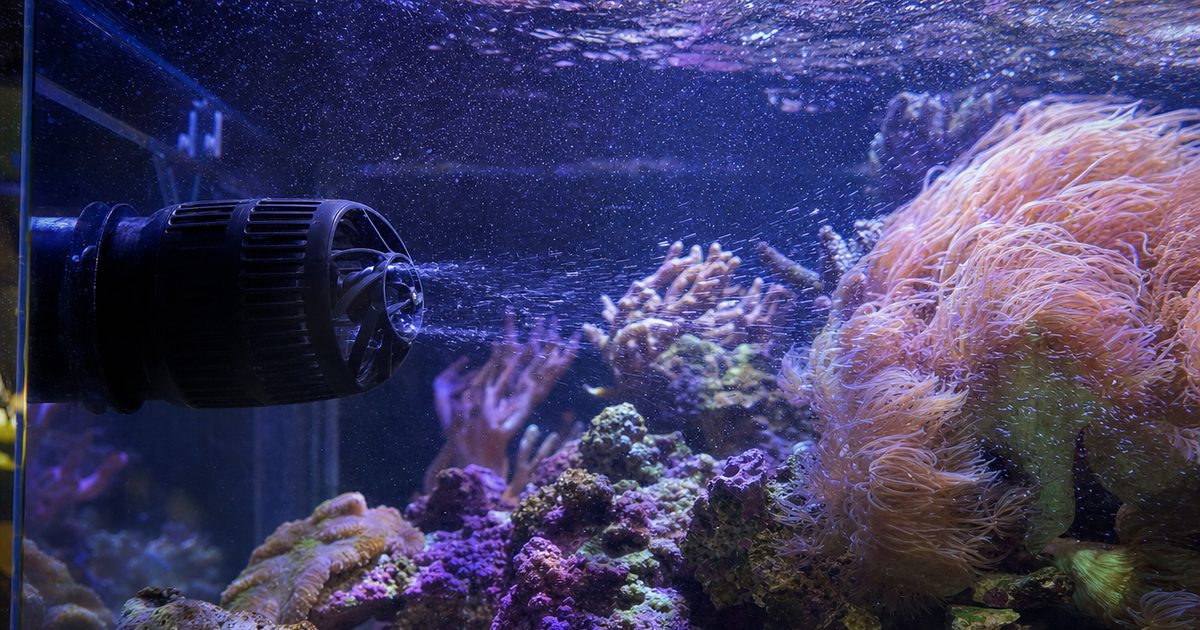
Flow is the spec beginners under-buy most, and dead spots crash more first reefs than bad luck does. This silo explains reef circulation in plain English — turnover rate by reef type, the aquarium powerhead versus wavemaker versus gyre, return-pump flow, and where to place flow for random turbulent motion. The buying logic is turnover-first: match total flow to your highest-demand coral. Specs are verified against manufacturer and current Amazon listings; no hands-on testing is claimed.
Why flow keeps a reef alive
In the ocean, coral never sits in still water — current is constantly washing over it. In a closed tank, the powerheads and pumps recreate that current, and they're doing three jobs at once. They bring food and oxygen to coral that can't move to find it. They carry waste away from coral tissue before it irritates or smothers the polyps. And they keep detritus suspended in the water column so the skimmer and filter socks can export it, instead of letting it settle and rot in a corner. Get the flow right and corals open up, colour up and grow. Under-buy it and you get receding tissue, brown algae in the dead spots, and a tank that never quite thrives — which is exactly why I list flow as a make-or-break, not an afterthought.
Turnover rate by reef type
Flow is measured as turnover — how many times your total tank volume circulates per hour. A 50-gallon tank moving 1,000 GPH of total flow is running 20× turnover. How much you want depends entirely on what you keep:
- Soft corals and many LPS are happy around 10–20× turnover. Too much flow and soft corals stay closed or get sandblasted; this gentler band suits them.
- Mixed reefs usually land in the 20–30× range, enough for LPS while giving any SPS up high the stronger movement they want.
- SPS-dominant reefs want 30–50× or more. For an SPS-dominant tank, higher turnover makes sense because the dense branches need strong, turbulent flow to feed and to shed waste from deep in the colony.
These are total-system numbers, and the return pump only contributes a slice of them — the rest comes from dedicated circulation pumps in the display.
Powerhead vs wavemaker vs gyre
There are three families of circulation pump, and they differ mostly in controllability and the shape of the water they move.
Powerhead — fixed-output circulation
A powerhead is a simple, fixed-output pump that pushes a stream of water. It's the budget entry point and works fine for soft and LPS tanks, but because it runs at one speed it produces a steadier, less varied flow. Two powerheads angled toward each other can still create good turbulence.
Wavemaker — controllable, pulsing flow
A wavemaker is a controllable powerhead (or a controller driving one) that can ramp, pulse and vary its output to mimic natural wave motion. The variability is the point: alternating and pulsing flow reaches more of the tank and prevents the static dead spots a fixed pump leaves. Controllability is the spec that separates a wavemaker from a plain powerhead, and it's why most reefers step up to one.
Gyre — a broad sheet of water
A gyre pump uses a long, thin cross-flow design to push a wide sheet of water across the length of the tank, creating a broad circular current rather than a focused jet. Gyres excel at even, whole-tank circulation and at reaching the bottom glass where detritus settles. They're a strong choice for longer SPS tanks that need high, even turnover.
Where to place flow for no dead spots
The aim is random turbulent motion everywhere, not a single laminar jet. A straight blasting stream batters one coral and leaves the rest of the tank stagnant. Instead, angle pumps so their streams cross each other or bounce off the glass to break into turbulence, and use a wavemaker's alternating pattern to keep the flow shifting. Watch the tank: anywhere detritus piles up is a dead spot, and a dead spot is where the next nuisance-algae patch starts. Adjust angles until nothing settles. The sand bed shouldn't be sandblasted into dunes, and corals should sway gently rather than whip. Placement is free to change, so spend a week tuning it before you blame the gear.
Featured guides
The current published guides in this silo. More land each batch.
Landing next: aquarium powerhead guide, best gyre pump, reef tank turnover rate, powerhead vs wavemaker, flow placement for SPS, best nano powerhead, and best return pump.
Frequently asked questions
How much flow does a reef tank need?
Flow is measured as turnover — how many times the tank volume circulates per hour. As a rough guide, soft corals and LPS are happy around 10–20× turnover, while SPS want 30–50× or more. The goal is random, turbulent motion across the whole tank, not a single blasting jet. Match total flow to your highest-demand coral group. These are general reef-keeping guidelines, not a prescription for your specific tank.
Powerhead, wavemaker or gyre — what is the difference?
A powerhead is a fixed-output circulation pump. A wavemaker is a controllable powerhead (or a controller driving one) that can pulse and vary flow to create more natural motion. A gyre pump pushes a wide sheet of water across the tank for broad, even circulation. Controllability and flow type are the specs that separate them.
Why do SPS corals need more flow?
SPS corals rely on strong, turbulent flow to deliver food and oxygen and to carry away waste from their dense branches. Too little flow and they recede; the right turbulent motion keeps them healthy. This is general reef-keeping information, not prescriptive husbandry — observe your own corals and adjust.
Where should I place flow pumps?
Aim flow so the streams cross or bounce off the glass to create random turbulence rather than a single laminar jet, and check for dead spots where detritus settles. Many reefers angle two pumps toward each other or run an alternating wavemaker pattern. The aim is motion everywhere, with no stagnant pockets.
High turbulent turnover is a reef requirement — most planted freshwater tanks deliberately run gentler flow so as not to flush out CO2 or uproot plants, so the powerheads and gyres here are sized for a different job. If you also keep a planted tank, Planted Tank Hub is the freshwater-aquascaping sister site covering gentle circulation and CO2. Coral & Flow stays strictly saltwater reef.