Best Protein Skimmers
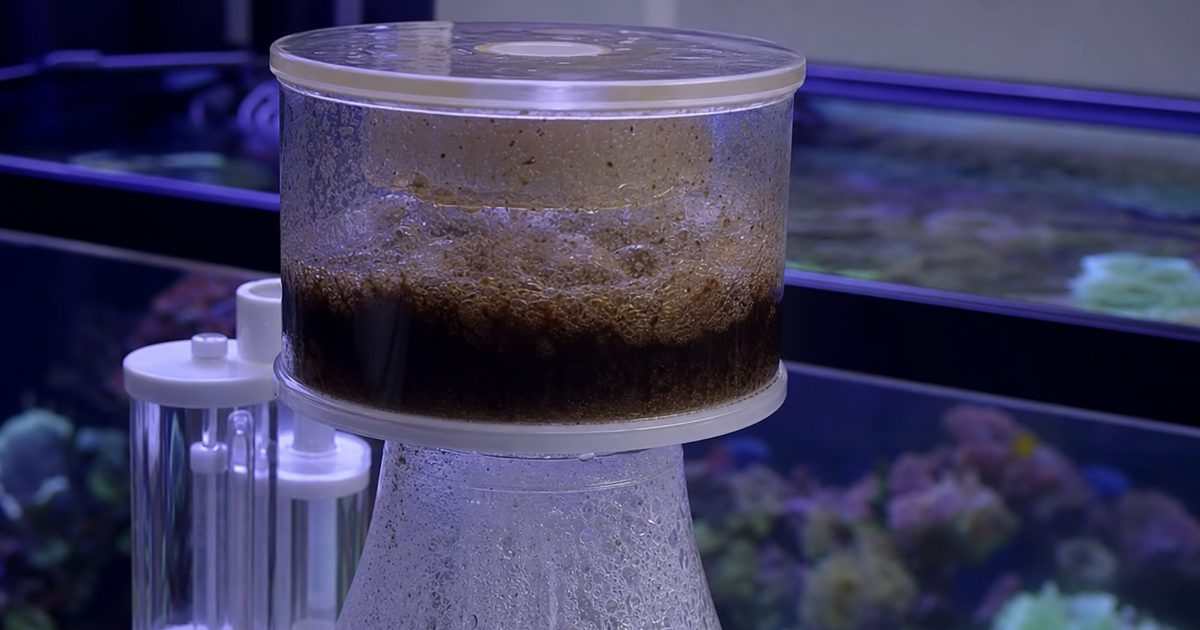
A protein skimmer is the single most effective waste-export device on a reef, and sizing one to your real bioload is the decision this guide is built around. The best skimmer is not the most powerful one you can afford — it is the one matched to your plumbing and rated comfortably above the waste your tank actually produces. This guide explains the specs that decide the fit — rated tank volume, pump, footprint, cup volume, type and air draw — then matches them to five categories: best overall, best budget, best nano, best HOB and best in-sump. The verified picks appear in each slot once real product data is in.
A note on how to read this. There is no single "best" skimmer for everyone — the right one depends on whether you run a sump or an all-in-one, how heavily you plan to stock, the footprint you have to work with, and your budget. So the value here is the framework: what each spec changes, so you can shortlist a skimmer that suits your situation. Read the framework first, then look at the picks. This sizing question is personal for me. My first saltwater tank crashed, and an undersized skimmer — bought because it was the cheaper option — was one of the reasons why. I had rushed the cycle and run too little flow as well, but the skimmer that could never quite keep up with the bioload was the part I notice most reefers at my reef club get wrong on their first build. That is the whole reason this guide leads with rated volume and bioload instead of brand name.
Specs verified against manufacturer details and current Amazon listings — no hands-on testing claims. Skimmer GPH ratings and rating bands are derived from published specs and established reef guidelines, not bench measurement. Livestock guidance is general reef-keeping information, not veterinary advice.
How to choose a protein skimmer
A handful of specs decide whether a skimmer suits your reef. These are exactly the columns in the comparison below, and reading them in the right order — type first, then rated volume against your real bioload — is most of the job.
Rated tank volume vs your real bioload — the number that matters most
Rated tank volume is the manufacturer's claim of how big a tank the skimmer can handle, and it is the first figure to read — but read it against your bioload, not your tank label. A skimmer's rating assumes an average stocking level, so a heavily stocked tank pushes well past that assumption. Spec-by-spec, a skimmer rated well above your display volume handles a heavy bioload because it keeps a tall, stable foam column even when waste spikes after a feeding, while a skimmer rated right at your tank size has no headroom when stocking grows.
The honest rule is to size up. An oversized skimmer running gently is easy to tune and rarely a problem; an undersized one straining at its limit cannot be tuned past its physical capacity. Most mixed reefs I see end up stocked heavier than the owner first planned, so building in a margin almost always pays off. The Reef Matcher turns your tank volume and intended stocking into a rating band, which is the fastest way to avoid buying a skimmer you outgrow in a season.
Skimmer type — in-sump, HOB or nano
Type is how the skimmer fits your system, and it decides what is even an option for you. In-sump skimmers sit inside the sump and deliver the most performance, the largest cup volume and the most adjustability — they are the default for any tank with a sump. HOB (hang-on-back) skimmers clip to the rim of a sump-less all-in-one tank, where there is simply nowhere to put an in-sump unit. Nano skimmers are purpose-built for small water volumes and tight footprints.
For most reefers the choice is made by the tank: if you have a sump, an in-sump skimmer is almost always the better unit; if you run an all-in-one or a nano, you match the skimmer to that constraint. The trap is buying on rated volume alone and finding the unit will not physically fit where it has to go — which is why type and footprint are the two specs that gate the decision before bioload even comes in. The filtration & skimmers hub walks the sump-versus-all-in-one logic in plain English if you are still deciding on plumbing.
Pump and air draw — the engine that makes the foam
A skimmer makes foam by injecting air into water, so the pump and its air draw are the engine of the whole process. Air draw — usually listed as litres or gallons of air per hour — tells you how much air the pump pulls into the body, and more air, well-matched to the body diameter, generally means more skimming capacity. The pump itself also sets power draw and noise, both of which matter on a tank that lives in a living room.
Read air draw together with rated volume rather than on its own: a big air figure on a narrow body does not skim like the same air in a wider column. This is one of the places the spec sheet can mislead a first-time buyer, which is why the comparison shows pump, air draw and rated volume side by side rather than letting any single number stand in for skimming power.
Footprint and cup volume — the practical fit
Two smaller specs round out the decision. Footprint is the physical space the skimmer needs in your sump or on your tank rim — the spec that quietly disqualifies an otherwise ideal unit because it will not fit the sump chamber you have. Cup volume is how much skimmate the collection cup holds before you empty it; a larger cup, and a skimmer sized above your bioload, both mean fewer trips to empty it.
Settle these by measuring before you buy. Confirm the unit's footprint against your sump chamber or tank rim, and weigh cup volume against how often you want to be emptying it — most mixed reefs land between every few days and once a week. Getting this order right is how you avoid a skimmer that performs on paper but does not fit, or fills its cup faster than you want to manage.
The skimmers compared
A short list of widely available reef skimmers, compared on the specs above. Specs are verified against manufacturer details and current Amazon listings — no hands-on testing claims. Verified picks land once real product data is in.
| Best for | Rated tank volume | Pump | Type | Air draw | Footprint |
|---|---|---|---|---|---|
| Best overall | Up to ~105 gal | Aquatrance needle-wheel pump | In-sump | Not listed | Not listed |
| Best budget | 50-100 gal | DC needle-wheel pump | In-sump / hang-on | Not listed | Not listed |
| Best nano | Nano (small reef) | DC pump | Nano in-sump / hang-on | Not listed | Compact |
| Best HOB / hang-on-back | Not listed | Aquatrance needle-wheel pump | Hang-on-back (HOB) | Not listed | Hang-on-back |
| Best in-sump | 135-185 gal | Controllable DC pinwheel pump | In-sump | Not listed | Not listed |
Our top picks
Best overall: Reef Octopus Classic 110-INT Needle Wheel Protein Skimmer for Reef Aquariums

Best overall
Reef Octopus Classic 110-INT Needle Wheel Protein Skimmer for Reef Aquariums
Reef Octopus
- Rated tank volume: Up to ~105 gal
- Pump: Aquatrance needle-wheel pump
- Footprint: Not listed
- Cup volume: Not listed
- Type: In-sump
- Air draw: Not listed
The Reef Octopus Classic 110-INT is an in-sump needle-wheel skimmer with a long track record on mixed reef tanks up to around 105 gallons. It suits reefers who want a proven, quiet workhorse skimmer as their main filtration.
Last checked 2026-06-15
Best budget: IOAOI Protein Skimmers for Saltwater Aquariums, In-Sump/Hang-On Protein Skimmer for 50-100 Gallon Reef Tank

Best budget
IOAOI Protein Skimmers for Saltwater Aquariums, In-Sump/Hang-On Protein Skimmer for 50-100 Gallon Reef Tank
IOAOI
- Rated tank volume: 50-100 gal
- Pump: DC needle-wheel pump
- Footprint: Not listed
- Cup volume: Not listed
- Type: In-sump / hang-on
- Air draw: Not listed
The IOAOI skimmer covers 50-100 gallon reef tanks at well under $100 with a DC needle-wheel pump. It suits budget-minded reefers who want effective skimming without a premium price.
Last checked 2026-06-15
Best nano: IOAOI Nano Protein Skimmer for Saltwater Aquarium, Compact Reef Tank Skimmer

Best nano
IOAOI Nano Protein Skimmer for Saltwater Aquarium, Compact Reef Tank Skimmer
IOAOI
- Rated tank volume: Nano (small reef)
- Pump: DC pump
- Footprint: Compact
- Cup volume: Not listed
- Type: Nano in-sump / hang-on
- Air draw: Not listed
The IOAOI Nano is a compact skimmer sized for small reef and nano tanks where space is tight. It suits nano reefers who need real skimming in a small footprint.
Last checked 2026-06-15
Best HOB / hang-on-back: Reef Octopus OCTO Classic 1000 HOB Hang-On-Back Protein Skimmer

Best HOB / hang-on-back
Reef Octopus OCTO Classic 1000 HOB Hang-On-Back Protein Skimmer
Reef Octopus
- Rated tank volume: Not listed
- Pump: Aquatrance needle-wheel pump
- Footprint: Hang-on-back
- Cup volume: Not listed
- Type: Hang-on-back (HOB)
- Air draw: Not listed
The Reef Octopus OCTO Classic 1000 hangs on the back of the display, giving reefers without a sump access to quality Reef Octopus skimming. It suits all-in-one and sump-free reef tanks.
Last checked 2026-06-15
Best in-sump: MagTool Aquarium in-Sump DC Protein Skimmer with Controllable DC Pinwheel Pump, Anti-Overflow Design, for Up to 135-185 Gal Reef Tank (N170 Plus)

Best in-sump
MagTool Aquarium in-Sump DC Protein Skimmer with Controllable DC Pinwheel Pump, Anti-Overflow Design, for Up to 135-185 Gal Reef Tank (N170 Plus)
MagTool
- Rated tank volume: 135-185 gal
- Pump: Controllable DC pinwheel pump
- Footprint: Not listed
- Cup volume: Not listed
- Type: In-sump
- Air draw: Not listed
The MagTool N170 Plus is an in-sump skimmer with a controllable DC pinwheel pump and anti-overflow design rated for 135-185 gallon reef tanks. It suits larger systems wanting adjustable skimming from a sump.
Last checked 2026-06-15
Who should buy what
The sump owner — an in-sump skimmer sized above bioload
If you run a sump, the best overall and best in-sump slots point the same way: an in-sump skimmer rated comfortably above your real bioload. Spec-by-spec, an in-sump unit gives you the most foam-column height, the largest cup and the most room to tune wet or dry, all of which matter most on a heavily stocked or growing reef. This is the configuration most established tanks settle on, and the one I run on my own mixed reef.
The trade-off is footprint — an in-sump skimmer takes up a chamber of your sump, so confirm it fits before you buy on rated volume alone. Get that right and an in-sump skimmer rated above your bioload is the part of the filtration setup you are least likely to replace, because it has the headroom to grow with your stocking.
The all-in-one owner — an HOB skimmer matched to the rim
If your tank has no sump, the best HOB slot is your lane. Spec-by-spec, a hang-on-back skimmer is engineered to work without a sump, hanging on the tank rim and pulling waste from the display directly. The figure that matters most here is still rated volume against bioload — an all-in-one tank is usually smaller, so a modest HOB unit can be plenty, provided you do not overstock it.
The honest trade-off is ceiling: an HOB skimmer cannot match a large in-sump unit's cup volume or adjustability, so if you expect to move to a sump later you may upgrade then. For a sump-less build today, an HOB skimmer matched to your rim and sized above your stocking is the right tool — and far better than running no skimmer at all on a marine tank.
The nano reefer — a nano skimmer that actually fits
The best nano slot suits the small-tank reefer working with tight space and a small water volume. The spec that decides everything here is footprint: a nano skimmer has to fit a compact sump or back chamber, so the smallest capable unit usually wins. Rated volume still matters, but on a nano the constraint is almost always physical space first.
The trade-off is that nano skimmers have less headroom, so a heavily stocked nano can outrun a small skimmer quickly — nano tanks are less forgiving of overstocking precisely because the water volume is small. My own first reef was a nano, and the lesson it taught me was patience and light stocking, not chasing a bigger skimmer than the tank could house. Match the unit to the footprint, stock lightly, and a nano skimmer does its job.
The budget-conscious first build — buy the size right, not the brand
The best budget slot is for the first-time reefer keeping the build affordable. The temptation is to save money on the skimmer, and that is the exact mistake that cost me my first tank. Spec-by-spec, the figure to protect on a budget is rated volume against bioload — it is better to buy a well-sized budget skimmer than a fancier unit that is still undersized for where your stocking is heading.
The trade-off is that the cheapest units skimp on pump quality, cup volume or adjustability, so shop for the size first and accept fewer features rather than the other way round. An undersized skimmer crashes more first reefs than a basic-but-correctly-sized one ever will. Buy the size right once, and the budget skimmer earns its place in the stability stack.
What to buy alongside the skimmer
A skimmer is the heart of a natural reef cart-stack, but it works alongside the rest of the gear, not instead of it. Flow comes next — see the best wavemaker for your reef tank to set turnover so waste reaches the skimmer instead of settling in dead spots. Then hold temperature steady with the best reef tank heater, because stability is what keeps the whole system alive. Not sure on the rating? Run the Reef Matcher to turn your tank volume and stocking into a skimmer band, turnover target and heater wattage.
Frequently asked questions
What is the best protein skimmer for a reef tank?
The best skimmer is the one rated comfortably above your real bioload and matched to your plumbing — in-sump for a sump, HOB for an all-in-one, nano for a small footprint. Sizing up is the safer error. Spec-by-spec, a skimmer rated well above your display volume handles a heavy bioload because it keeps a tall, stable foam column even when waste loads spike after feeding. Verified picks land on this page once real product data is in. These are general reef-keeping guidelines, not a prescription for your specific tank.
How do I size a protein skimmer?
Size to bioload, not just the tank label. A heavily stocked tank wants a skimmer rated well above its actual water volume; a lightly stocked tank can run nearer its rating. The reason is simple — the rated tank volume on the box assumes an average bioload, and most reefers I see end up stocking heavier than they planned. An undersized skimmer is one of the most common reasons a first reef struggles, so when in doubt, size up. Run the Reef Matcher to turn your tank volume and stocking into a rating band.
In-sump, HOB or nano skimmer?
Match the skimmer type to your plumbing first, then size to your bioload. In-sump skimmers sit in the sump and give the most performance, cup volume and adjustability for any tank with a sump. HOB (hang-on-back) skimmers suit sump-less all-in-one tanks where there is nowhere to put an in-sump unit. Nano skimmers are built for small footprints and small water volumes. The type decides what physically fits; the rated volume decides whether it can keep up.
What does air draw tell me about a skimmer?
Air draw is how much air the skimmer pump pulls into the body to make foam, usually listed in litres or gallons per hour of air. More air, well-matched to the body diameter, generally means more skimming capacity — foam is made of air bubbles binding to waste, so air draw is the engine of the whole process. It is one of the specs we compare, alongside rated tank volume, pump, cup volume and footprint. Read it together with rated volume rather than on its own.
Can a protein skimmer be too big for my tank?
An oversized skimmer is rarely a problem on a reef, and it is the error to make if you are going to err. A skimmer rated above your tank simply runs gently and pulls a slightly wetter or drier foam depending on how you set the water level — you tune it down. An undersized skimmer, by contrast, cannot be tuned up past its physical capacity. The one real limit is footprint: the unit still has to fit your sump or hang on your tank, which is why footprint is a column in the comparison.
How often do I empty the collection cup?
It depends on bioload and how wet you run the foam, but most mixed reefs land somewhere between every few days and once a week. A skimmer rated well above your bioload tends to fill its cup more slowly and steadily, which is one quiet benefit of sizing up. This is general reef-keeping information — follow your skimmer manufacturer's instructions for cup and pump cleaning, and test your own water rather than judging the tank by the cup alone.
Does a protein skimmer replace water changes?
No. A skimmer exports dissolved organic waste before it breaks down, which lightens the load and helps stability — but it does not replenish trace elements or buffer the way a water change does, and it does not dose calcium, alkalinity or magnesium. Think of the skimmer as the first line of waste export in the stability stack, working alongside water changes, flow and dosing rather than instead of them. These are general guidelines, not a prescription for your specific tank.