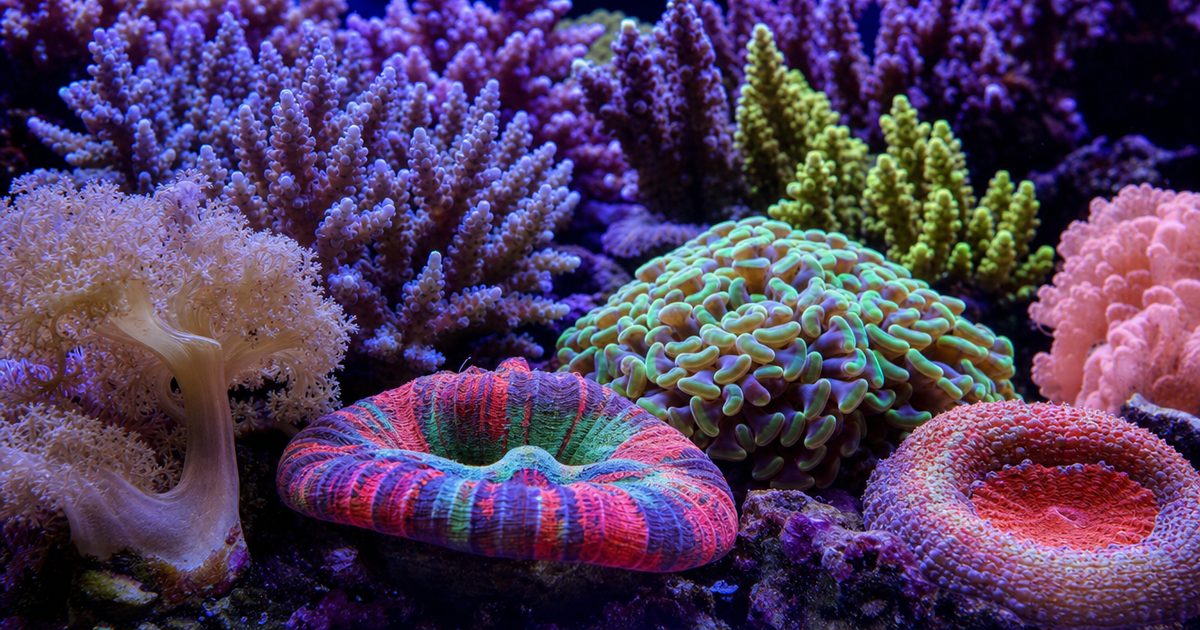
My mixed reef didn’t start mixed. It started with softies, grew into LPS, and only years later did I add a few SPS. That progression wasn’t an accident — it’s the order I’d recommend to most beginners, because each coral group asks more of your tank than the last. Here’s how my setup actually changed as I moved through them, and why going in this order kept me out of trouble.
Soft corals: where I started, and why
After my first tank crashed, I rebuilt cautiously and stocked softies first: mushrooms, zoas, a leather coral, some green star polyp. Soft corals are the forgiving group, and that’s exactly why they’re the right first step. They tolerate a wider range of conditions, they don’t demand pristine parameters, and they handle lower light and gentler flow.
What my setup looked like in the softie era:
- Light: modest. Softies do well at lower PAR, and blasting them with intense light makes many of them close up or brown out. My fixture ran gently.
- Flow: low to moderate, and not too direct. Plenty of softies actually look worse in heavy flow — a leather coral in a strong stream won’t extend properly.
- Stability demands: the most forgiving. Softies don’t burn through alkalinity and calcium the way stony corals do, so my dosing was minimal. They let me learn to keep a tank stable without punishing every wobble.
This is the stage where you learn the basics of a stable reef without the stakes being high. I can’t recommend it enough as a starting point.
LPS: the moderate step up
Once the softies were thriving and I trusted my stability, I moved into LPS — hammers, torches, frogspawn, a couple of acans. LPS (large polyp stony corals) build a calcium-carbonate skeleton, which is the first real shift: now my tank was consuming alkalinity and calcium, and parameter stability started to matter more.
What changed:
- Light: stepped up to moderate PAR. LPS want more than softies but get unhappy under full SPS-level intensity. I raised my fixture’s output, but gradually.
- Flow: moderate and importantly indirect. LPS have fleshy polyps that inflate with water, and a direct jet shreds them or stops them expanding. I positioned them where they got turbulence, not a fire hose.
- Stability demands: higher. Because LPS build skeleton, I started paying real attention to alkalinity and began light dosing to keep it steady as the corals consumed it. This is where my dosing pump earned its keep.
LPS were the bridge — colorful, rewarding, more demanding than softies but a long way from the precision SPS want.
SPS: the demanding group that changed everything
Only after years of a stable LPS-and-soft tank did I add a few SPS — some montipora first, then a little acropora. SPS (small polyp stony corals) are the demanding end of the hobby, and adding them forced upgrades across the board. They’re light-hungry, flow-hungry, and unforgiving of parameter swings.
What SPS demanded:
- Light: the big one. SPS want high PAR to color up and grow, and the right spectrum matters for coloration. This is the change that pushed my lighting hardest — I placed SPS high in the tank in the strongest light and ramped intensity up slowly over weeks so I didn’t bleach them.
- Flow: high, turbulent, random. SPS live on reef crests being hammered by surge, and weak flow is one of the fastest ways to lose them. My gyre and the placement of my powerheads got reworked around the SPS.
- Stability demands: the strictest. SPS consume alkalinity and calcium fast and hate swings — a sudden alkalinity shift can burn tips overnight. This is where rock-steady dosing and a tight, stable system stop being optional.
Adding SPS is what turned my “keep it stable” habit from good practice into non-negotiable. They reward a steady tank and punish a bouncy one harder than anything else I keep.
Lighting was the upgrade each step pushed hardest
If there’s one piece of gear that changed most as I moved up the coral ladder, it was lighting. Softies wanted modest light, LPS wanted more, SPS wanted a lot — and matching the fixture to the demanding end is what makes a mixed reef work. I won’t claim to have bench-tested a shelf of fixtures; what I can tell you is which coral group needs what, and that the light is the spec most tied to how far up the coral ladder you can go.
If you’re choosing a fixture with one eye on where you’ll end up, the best reef lights guide compares them by coral type — output for SPS versus the gentler needs of softies and LPS — so you can buy for the reef you’re growing into, not just the one you have today.
The order is the lesson: softies to learn on, LPS to step up, SPS once you’ve earned a stable tank. Each group taught me something, and none of them forgave being rushed.
Coral care ranges here are general reef-keeping information from established references, not a prescription for your tank or livestock. Acclimate corals slowly, test your own water, and follow your equipment’s instructions.