Of all the things I got wrong on my first reef, flow is the one I understood the least at the time. I had a vague idea that water needed to move, so I put one small powerhead in a corner and called it done. Corals on the far side of the tank slowly starved and suffocated in their own waste, and I had no idea why. Flow is the parameter beginners underestimate most, and it’s worth getting right before you buy a single coral.
Why flow matters more than it looks
Corals don’t have a circulatory system the way fish do. They rely on water moving past them to deliver food and oxygen and to carry away waste and the slime they shed. In the ocean, that water never stops moving. In a glass box with one weak powerhead, you get stagnant zones — dead spots — where detritus settles, rots, and feeds nutrients into the water. Those dead spots crashed half my first tank before I knew the term for them.
Good flow does three jobs: it keeps food and oxygen reaching every coral, it stops detritus settling so the skimmer can export it, and it gives corals the gentle (or not so gentle) motion they evolved with.
Turnover: the number people ask about
Turnover is how many times your total tank volume gets moved per hour, written as a multiple — ”×/hr.” If you run 600 gallons per hour of total flow on a 60-gallon tank, that’s roughly 10× turnover. It’s a rough figure, not a precise one, because real flow swirls and overlaps rather than neatly cycling the whole volume. But it’s a useful starting point, and it scales with what you keep.
Here’s the general framing I use, drawn from common reef guidelines rather than anything I measured on a bench:
- Soft corals (mushrooms, zoas, leathers, GSP): the most forgiving. They’re happy in lower, gentler flow — roughly the lower end of the reef range. Too much flow and some softies won’t open fully.
- LPS (hammers, torches, frogspawn, acans): moderate flow, and crucially indirect flow. Blast an LPS coral with a direct stream and the flesh gets shredded or won’t expand. They want movement that reaches them as turbulence, not a fire hose.
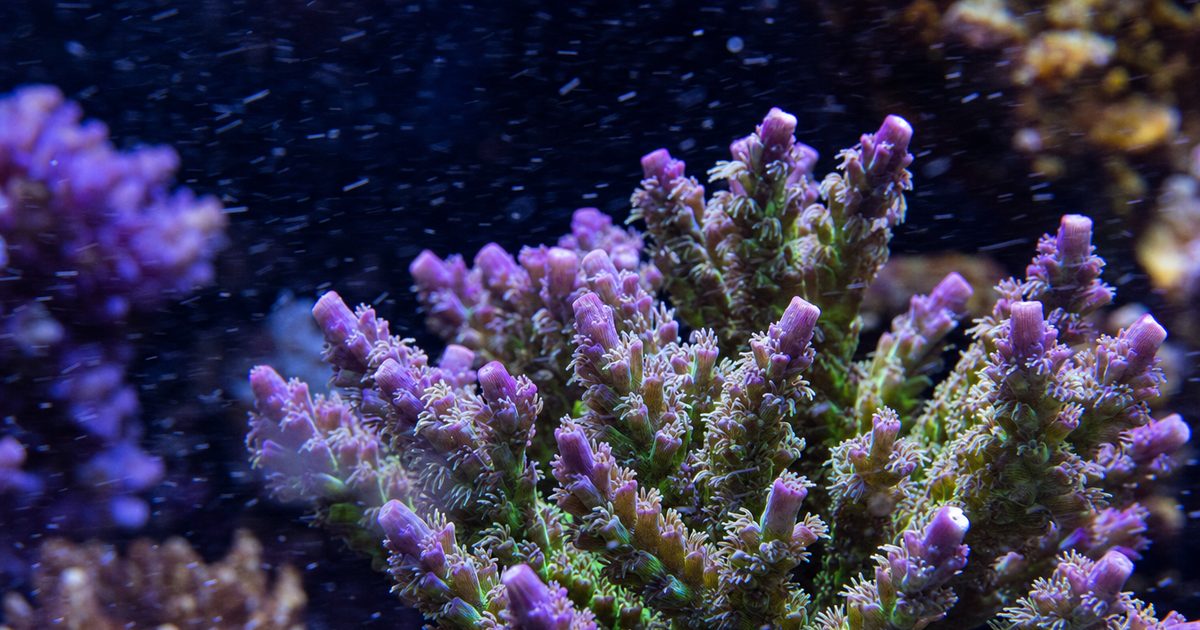
- SPS (acropora, montipora and friends): the demanding ones. SPS want high, turbulent, random flow — the top of the range and then some. In the wild they live on reef crests being hammered by surge. Weak flow is one of the fastest ways to lose SPS.
A mixed reef like mine sits in the middle and uses placement to give each group what it wants — which brings me to the part that matters more than the headline number.
Placement beats the raw number
You can hit a great turnover figure and still have an unhealthy tank if the flow all goes one way. The goal isn’t a current; it’s random turbulent motion with no dead spots. A laminar river straight across the tank leaves the back corners stagnant and bullies the corals in the stream.
What works on my own reef:
- Two flow sources aimed to collide or cross, so the water tumbles instead of running in a straight line.
- A gyre or wavemaker on a pulse mode, so the flow surges and eases rather than blasting constantly — closer to what corals see in the wild.
- SPS placed up high in the strongest flow, LPS lower and off to the side in the gentler indirect movement, softies wherever the flow is calmest.
- A periodic glass-and-rock check: if detritus is settling anywhere, that’s a dead spot, and the flow needs adjusting.
Powerheads, wavemakers, gyres
The hardware comes in a few flavors. Simple powerheads push a fixed stream. Wavemakers (controllable powerheads) let you set pulse and wave patterns. Gyres push a broad sheet of water across the tank and are great for turbulent, full-width flow. Which one suits you depends on tank shape, what you keep, and your budget.
I won’t pretend to have tested every pump on a bench — I run a couple of powerheads and a gyre on my own tank and that’s the honest extent of it. For the specs compared side by side, the best wavemakers and powerheads guide lays out flow rates, controllability and tank-size fit so you can match the hardware to your turnover target.
Get the flow right before the corals go in. Dial it, watch for dead spots, and let the SPS guide you toward more rather than less. Flow is cheaper to fix on an empty tank than after a coral has melted.
Turnover ranges and placement guidance here come from established reef references, not bench measurement. These are general reef-keeping observations — every tank is different, so watch your own corals and adjust.