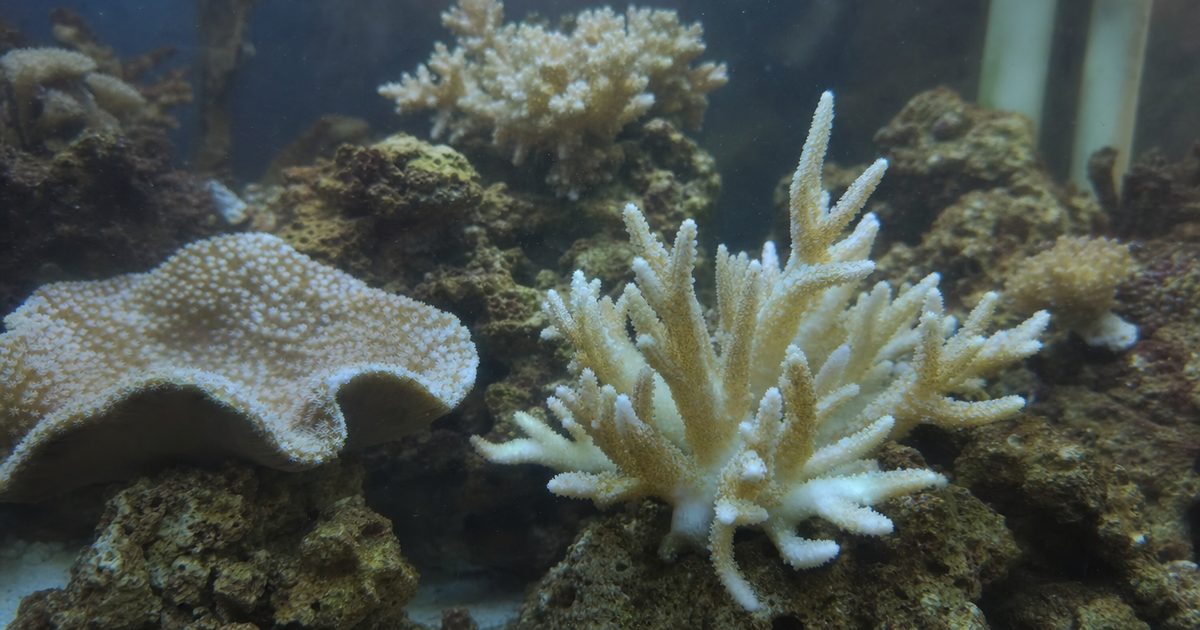
The first saltwater tank I ever owned was dead within about six weeks. Not “struggling” — dead. The corals melted off their frags one by one, the few fish I’d added looked stressed, and the water that had started out clear went a kind of cloudy, sour grey. I came to the hobby from years of keeping freshwater community tanks, and I walked in thinking I knew what I was doing. I didn’t. This is the story I tell every beginner at my reef club, because almost nobody who crashes a first tank crashed it for an exotic reason. They rushed.
I treated the cycle like a formality
Here’s the thing I got wrong before I got anything else wrong: I didn’t really cycle the tank. I knew the word. I’d read that you “cycle” a tank before adding livestock. But in my head, cycling was a box to tick — a few days of running the pump, maybe a week — and then the real fun started.
A reef cycle is not a formality. It’s the slow process of growing the bacteria that convert ammonia (toxic) to nitrite (toxic) to nitrate (much less so). Until that bacterial colony is established and stable, anything alive you put in the tank is breathing its own poison. On freshwater I’d gotten away with being impatient because my tap water, my plants and pure luck had carried me. Saltwater gave me no such mercy.
I added a clean-up crew and a couple of fish at around day ten. The ammonia spiked, I didn’t have a test kit good enough to see it coming, and the tank never recovered its footing. Everything I added after that was just feeding a problem I couldn’t see.
Chasing numbers made it worse, not better
Once things started looking off, I did what an anxious beginner does: I started fiddling. I dosed things I’d read about. I did a big water change, then another. I adjusted the salinity. I added a bottle of bacteria, then a different bottle of bacteria. Every day I changed something, because doing something felt better than doing nothing.
That was the second big mistake, and honestly it might be the more important lesson. A reef tank wants to find an equilibrium. Every time I yanked a parameter around, I knocked it further from stable. I was treating symptoms in a system that mostly needed to be left alone to settle. I’ve watched other beginners do the exact same thing since — the daily-tinkering death spiral — and it’s heartbreaking because the instinct comes from caring.
The skimmer and the flow were undersized too
The other two ingredients in my crash were gear I’d skimped on. I bought the cheapest protein skimmer I could find because it was rated “up to” my tank size on the box, and I ran a single small powerhead because I didn’t understand turnover. So I had a tank that couldn’t export waste efficiently and had dead spots where detritus settled and rotted. Underpowered skimmer plus too little flow plus an uncycled tank is a recipe, and the dish it makes is a crash.
I go deeper on the skimmer mistake in its own post because it deserves one — undersizing a skimmer is the most common false economy in the hobby. But it’s worth naming here as part of the same story.
What going slow actually looked like the second time
I nearly quit. What pulled me back was a guy at my local reef club who didn’t make me feel stupid — he just walked me through doing it slowly. The second tank, I did almost nothing for the first month except let it run.
- I cycled it properly. I added an ammonia source, tested every few days with a kit I actually trusted, and waited until ammonia and nitrite both read zero and nitrate started appearing. That took weeks, not days.
- I sized the skimmer up, not down. I bought one rated comfortably above my tank’s volume.
- I set the flow properly — enough turnover for the corals I planned to keep, placed to kill the dead spots.
- I held the parameters steady instead of chasing them. Steady beats perfect, every time.
- I stocked last, and slowly. One or two things at a time, with patience between.
That tank is the foundation of the mixed reef I still run today, eight-plus years later. Same lesson, learned the hard way: patience beats every shortcut.
If you’re about to start your first reef
Don’t rush the cycle. That’s the whole post, really. The cycle is the part that feels like nothing is happening, which is exactly why people skip it, which is exactly why first tanks crash. Everything else — skimmer sizing, flow, lighting, parameters — matters, but none of it saves a tank you stocked before it was ready.
If you want the full slow-and-steady version, I wrote up how to set up a reef tank without crashing it, in the order I’d actually do it now. Coral & Flow exists because I lost my first tank to rushing it, and I’d genuinely rather you didn’t.
These are general reef-keeping observations from my own experience, not a prescription for your specific tank. Always test your own water and follow each product’s instructions.