The fastest way I know to undo months of careful tank-building is to get impatient with livestock. Add too many things too quickly, or skip quarantine and bring in a disease, and a stable reef goes sideways in days. Stocking slowly is the least exciting discipline in the hobby and one of the most important. It’s the same lesson as the rest of my reefing, applied to the part where it’s hardest to resist — because livestock is the fun part.
Why stocking fast crashes tanks
A reef is a biological system in balance. The bacteria, the skimmer, the flow — all of it is tuned to handle a certain amount of waste from a certain amount of life. Add five fish at once and you’ve suddenly dumped a much bigger bioload onto a system that was balanced for less. Ammonia can spike. Nutrients climb. The skimmer falls behind. That’s exactly the cascade that wrecked my first tank, where I added livestock too fast onto a system that wasn’t even cycled.
Adding livestock slowly — a thing or two at a time, with real time between — lets the biology catch up. The bacterial population grows to match the new load, the skimmer keeps pace, and the tank absorbs each addition without a swing. It’s the difference between nudging a balanced system and shoving it.
How I add livestock now
My approach is boring on purpose:
- One or two additions at a time, then wait. I give the tank weeks between meaningful additions, not days, so the bioload steps up gently.
- Stock last, after the system is stable. Livestock is the final stage of a reef build, not the first. If parameters aren’t holding steady on their own, the tank isn’t ready for more life.
- Feed for the tank you have, not the one you’re planning. Overfeeding to a future stock list just spikes nutrients now.
- Watch after each addition. I keep an eye on nutrients and behavior for a couple of weeks after anything new goes in, so I catch a problem early instead of compounding it.
Quarantine: the discipline I wish I’d started with
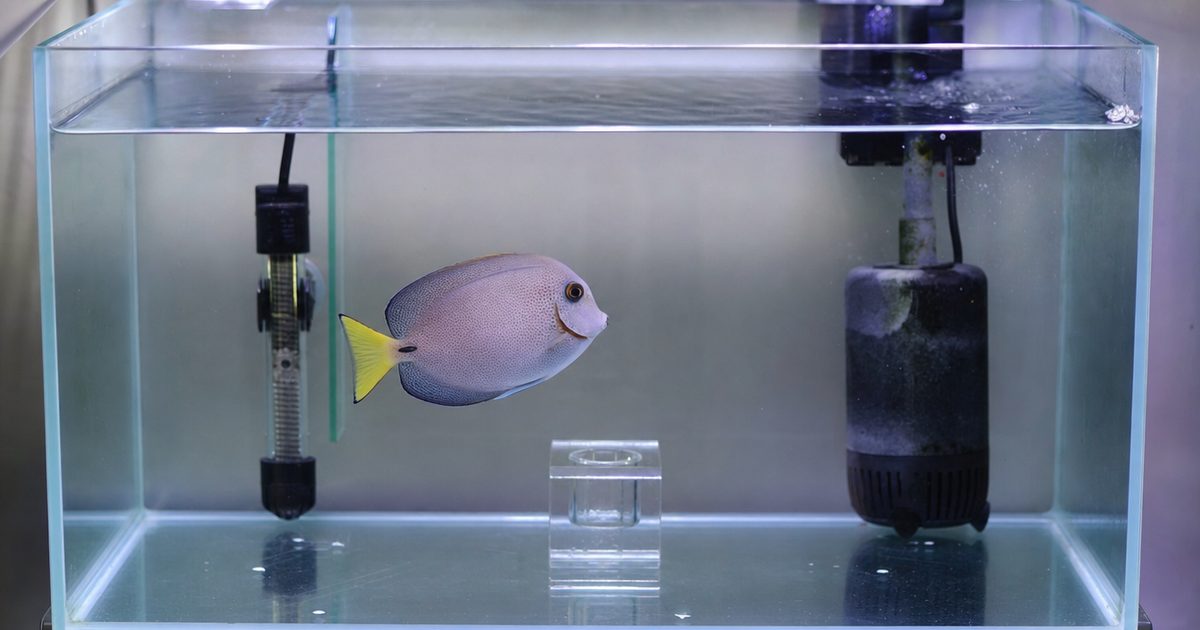
The other half of going slow is quarantine — keeping new arrivals in a separate tank for a period before they join the display. I’ll be honest: early on I didn’t quarantine, and I paid for it. A single new fish carrying a parasite can introduce a problem to your whole display, and a marine disease outbreak in a stocked reef is a genuinely awful thing to deal with, because many treatments aren’t reef-safe. You end up choosing between treating the fish and harming the corals.
A quarantine period lets you observe new arrivals away from the display, let them settle and eat, and catch obvious problems before they reach your established stock. I keep this strictly general on purpose: I’m not a vet, and disease diagnosis and treatment are genuinely outside what I’ll advise on. What I will say is that the discipline of isolating and observing new livestock before adding it to the display is one of the highest-value habits in the hobby, and one I adopted too late. If you’re dealing with a sick animal, that’s a conversation for a qualified aquatic vet or an experienced local, not a blog.
Patience is the whole hobby
Everything I write here comes back to the same place: patience beats every shortcut. Going slow with livestock is just that principle applied to the most tempting part of reefing. The fish and corals are why we’re here — of course you want to fill the tank. But a reef rewards the person who adds the next thing next month over the person who adds five things this weekend, every single time.
If you want the whole slow-and-steady build in order, from cycle to stocking, I laid it out in how to set up a reef tank without crashing it. Stocking is the last chapter for a reason. Earn the stability first, then add life slowly — and quarantine what you add.
The boring path is the one that keeps your tank alive. Go slow.
This is general reef-keeping information, not veterinary or disease-treatment advice. For sick livestock, consult a qualified aquatic vet. Quarantine and stocking practices vary — research thoroughly and follow established marine guidance.